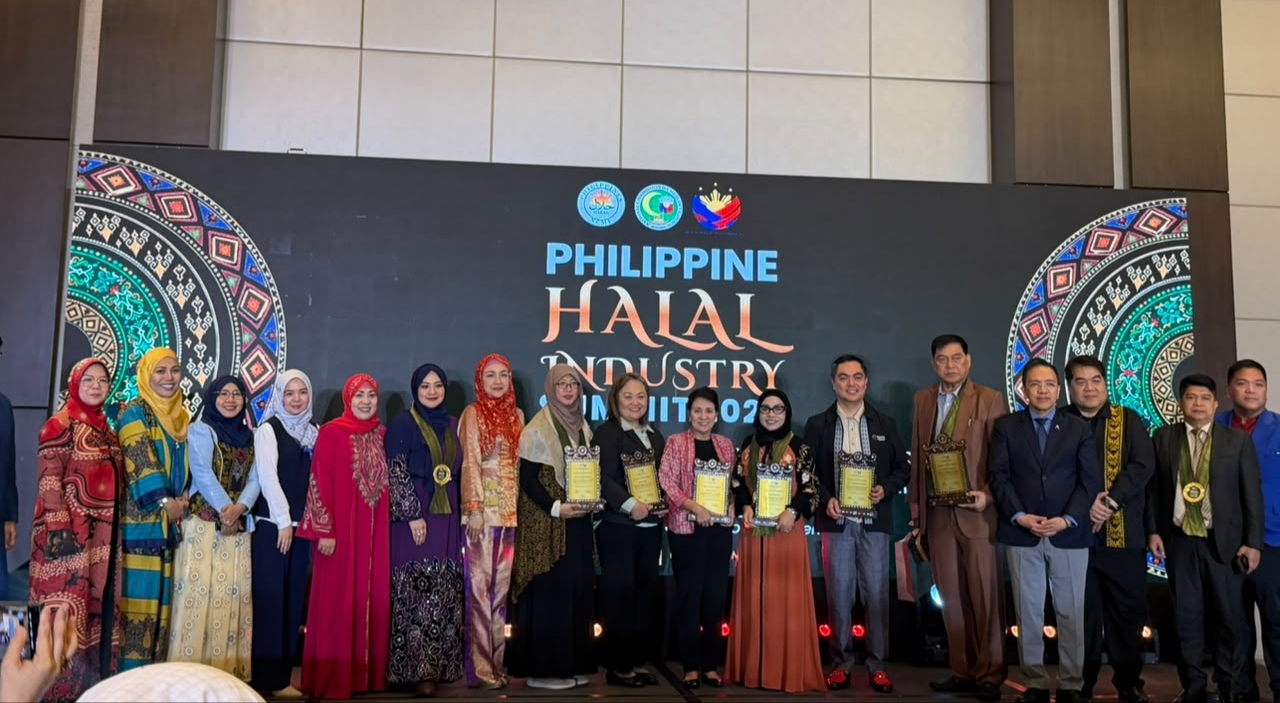
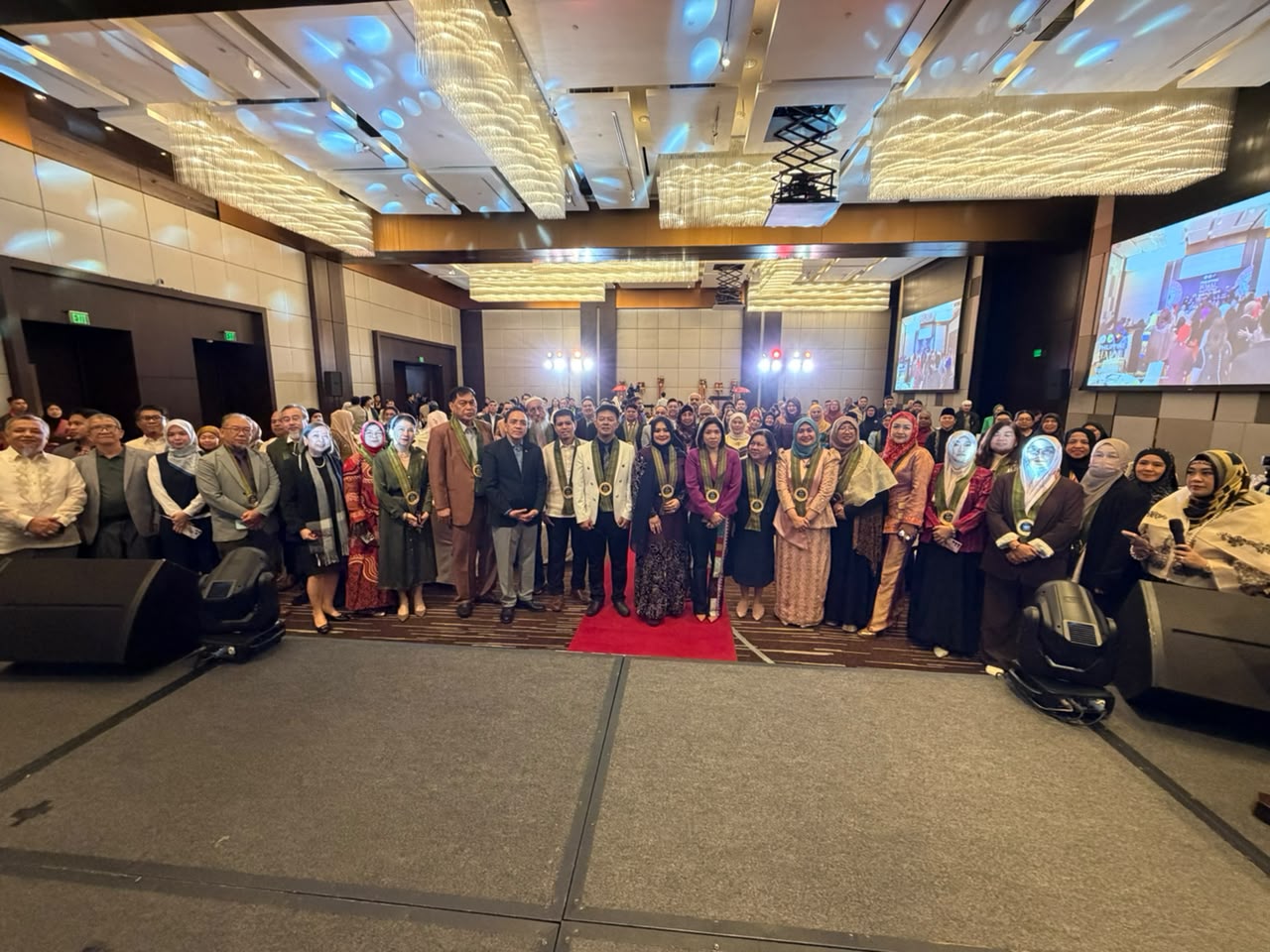

MAKATI CITY, PHILIPPINES — September 19, 2026 — The National Commission on Muslim Filipinos (NCMF), through its Bureau of Muslim Economic Affairs (BMEA), officially launched Day 1 of the Philippine Halal Industry Summit 2026 (“Halal Horizons Philippines”) at the New World Makati Hotel. Driven by the theme “Advancing the Philippine Halal Ecosystem: Integration, Innovation, and Global Competitiveness,” the high-level summit convened international delegates, government leaders, and industry specialists to foster regional collaboration and inclusive economic development.
Highlighting robust state backing, Special Assistant to the President Antonio Ernesto F. Lagdameo, Jr. emphasized the summit’s strategic value: “This initiative highlights the vital role of the Philippine Halal industry in creating economic opportunities, empowering MSMEs and communities, generating employment, attracting investments, and strengthening our presence in the global market”. Opening the summit, NCMF Secretary Sabuddin N. Abdurahim reiterated this collective call to action: “Our goal is not simply to discuss the potential of the halal industry, but to strengthen the partnerships and actions needed to turn that potential into real opportunities for Filipino businesses, cooperatives, producers, and communities”.
Congressman Yusop T. Alano, District Representative of the Basilan Lone District, expressed his support for the summit, emphasising that the Philippines should advance halal development across three key areas: from halal certification to stronger standards and systems, from halal consumption to halal production, and ultimately from a halal industry to a more comprehensive halal economy. He stressed the need for clearer roles, stronger coordination, and closer collaboration among government agencies, industry players, certification bodies, and other stakeholders to build a more integrated and competitive halal ecosystem in the Philippines.
The institutional direction of the event aligned closely with BMEA Director Saleha Pangarungan Sacar, whose strategic vision focuses on ensuring that Muslim Filipinos “are not merely beneficiaries of development, but active participants and contributors to nation-building”. Operational standards and policies were further explored by key speakers throughout the morning. Sertu International Chairman/President Nor Azwa Omar Jamli and Kazai Innovative Ideas Solution Associate Advisor Mohamad Nordin Zainuddin raised the issue regarding the potential of contamination inside daily products used, introducing Sertu as a cleansing protocol for the hospitality industry. NCMF Commissioner Mehol K. Sadain discussed the challenges in the Philippine halal industry, talking specifically about government standards for the halal industry. Outlining trade expansion, Department of Trade and Industry Assistant Director Maria Cecilia Angela D. Labadan explained the Philippine strategy to recognize and compete internationally.
Afternoon sessions focused on financial enablement, science, and technological advancement. Al-Amanah Islamic Investment Bank Chief Executive Officer Amenah F. Pangandaman stated that through created programs, many opportunities are open and running in supporting the halal industry, including at the SME level. She boldly asserted: “As a Philippine we shouldn’t miss the boat as H’s large potential in economic contributions.” Expanding on development and technology, Department of Science and Technology Undersecretary Leah J. Buendia spoke on building an advance halal ecosystem, while Ministry of Science and Technology Minister Bangsamoro Baileng S. Mantawil focused heavily on small micro enterprises (SMEs).
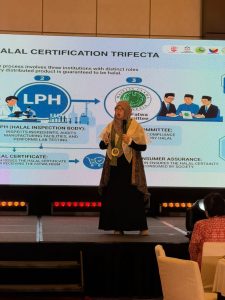
During the investment segment of the program, Murniati Mukhlisin, Tazkia University Professor representing Sakinah Finance Indonesia discussed global halal market trends and investment opportunities. The global halal and Islamic economy is entering a new phase of expansion. The latest State of the Global Islamic Economy Report estimates that Muslim consumer spending across six key sectors i.e. halal food, pharmaceuticals, cosmetics, modest fashion, Muslim-friendly travel, and media and recreation, reached USD 2.60 trillion in 2024 and is projected to rise to USD 3.56 trillion by 2029. Modest fashion alone accounted for USD 347 billion in Muslim consumer spending in 2024 and is projected to reach USD 444 billion by 2029.
Investment momentum is also accelerating. In 2024/25, Islamic-economy-related investment reached approximately USD 13.11 billion across 346 transactions. Islamic finance attracted the largest share of investment, followed by halal food, media and recreation, and Muslim-friendly travel. “For the Philippines, these developments present a timely opportunity to explore the wider halal ecosystem, including Islamic finance, halal food, modest fashion, Muslim-friendly tourism, pharmaceuticals, cosmetics, and creative industries. Rather than viewing halal as a niche market, the Philippines can consider it an emerging platform for trade, investment, entrepreneurship, innovation, and inclusive economic development,” said Murniati.
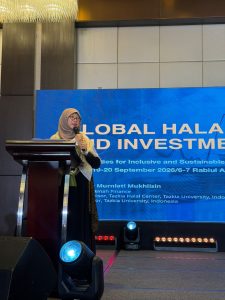
Presenting her insights on the global halal economy, Murniati Mukhlisin who is also representing The International Institute of Islamic Thought (IIIT) Indonesia noted that Indonesia currently ranks third worldwide in total transaction value, and she provided a powerful observation on how capital is being deployed: “The money is flowing into the backbone of the Islamic economy, not just its surface”.
Source: Sakinah Finance Public Relations