

Washington, D.C., July 15, 2026 — The International Islamic Economics and Finance Conference for Sustainable Development (IFESDC) 2026 opened today at the World Bank Headquarters in Washington, D.C., welcoming hundreds of participants from Southeast Asia, the United States, and other regions. The first day of the conference set the tone for two days of dialogue, focusing on how Islamic economics and finance can harness digital transformation to promote inclusivity, trust, and sustainability.
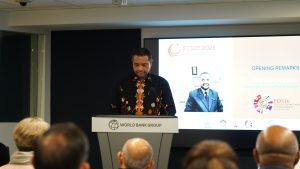
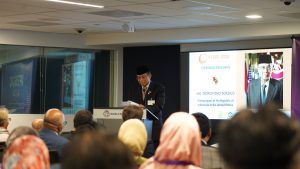
The opening session began with remarks from Firdaus Kadir, President of the Indonesian Muslim Association in America (IMAAM), and Nakhafi Hassan, Alternate Executive Director-EDS16 at the World Bank, who both emphasized the importance of collaboration between diaspora communities, policymakers, and international institutions. Ilias Skamnelos, Practice Manager for the Finance, Competitiveness and Innovation Global Practice in Europe and Central Asia at the World Bank, added that Islamic finance speaks directly to the Bank’s mission of a world free of poverty on a livable planet, rooted in risk-sharing, financial inclusion, and ethical investment. Setting a strong moral foundation for the event, the Ambassador of the Republic of Indonesia to the United States, Indroyono Soesilo, stated in his opening greeting, “prosperity is most enduring when it is shared; innovation is most valuable when it is inclusive; and development is most meaningful when it is guided by ethics.”
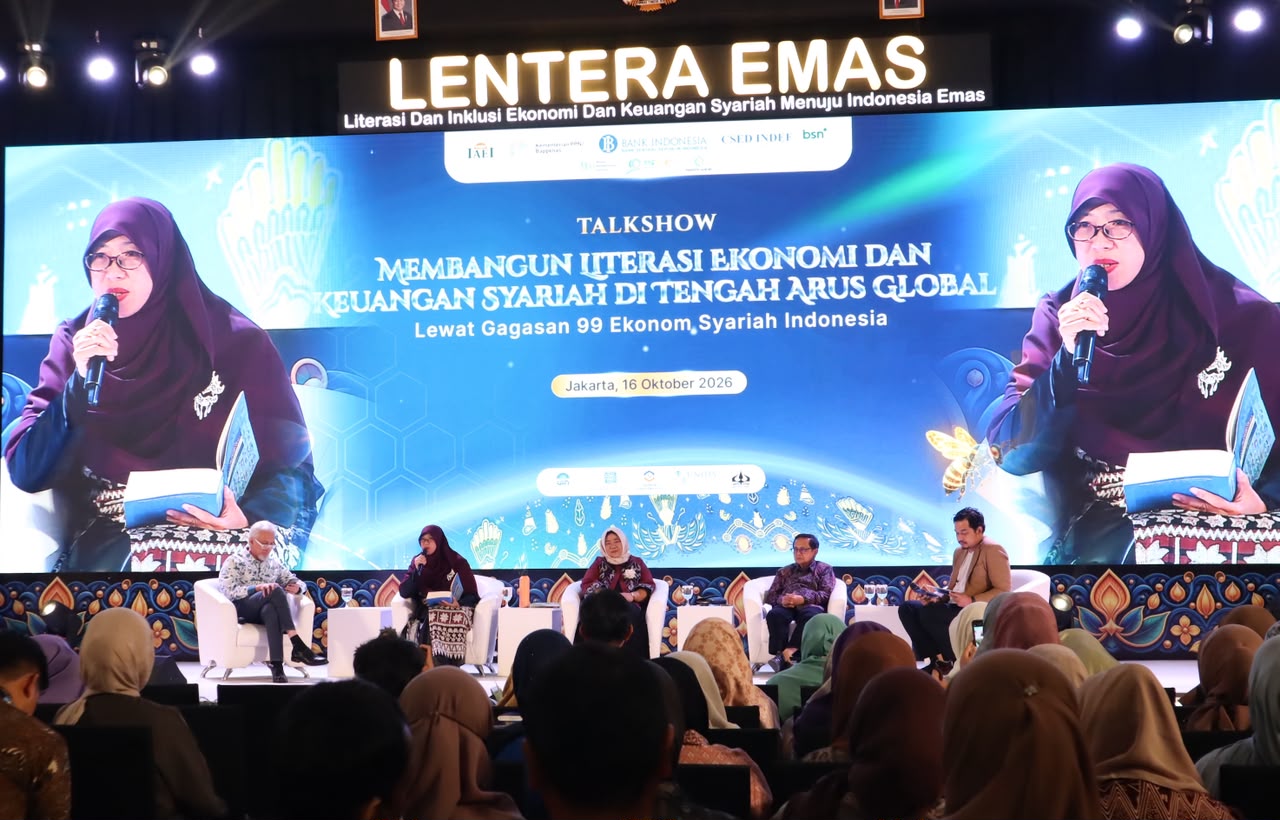
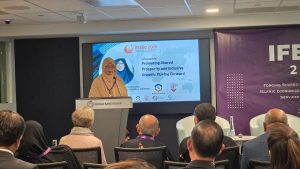
Moderated by Murniati Mukhlisin, Former Rector of Tazkia University and Founder of Sakinah Finance, the first panel explored pathways for digital service delivery in the Islamic economy. During the session, Franziska Ohnsorge, Chief Economist for Asia at the World Bank, discussed regional economic developments, noting that “services liberalization and investment in human capital could boost productivity growth, improve labor market outcomes for more workers.” Rafi-uddin Shikoh, CEO of DinarStandard, highlighted the massive opportunity to serve the unbanked through digital tools, stating, “The pattern is clear: where the rails and rules come first, inclusion follows—and the people left out are reached fastest.” Adding to this, Khaled Elsayed, CEO of Guidance Residential, shared strategies for scaling Islamic home financing, noting that “product expansion, digitization, automation, and AI tools are key to increasing access and efficiency to fulfill the consumer demand for Islamic finance products.” Arief Subekti, Executive Vice President and Head of Sharia Business at PT Sarana Multi Infrastruktur (PT SMI), showcased impactful infrastructure financing and emphasized, “Indonesia is uniquely positioned to become a Regional Hub for Sustainable and Impactful Sharia Financing. PT SMI, acting as a catalyst for development, leads this transformation.”
Following the first panel, Michael J.T. McMillen, Professor of Law at Columbia University and Partner at Curtis, Mallet-Prevost, Colt & Mosle LLP, delivered a special guest lecture examining Maqashid Sharia principles. Offering a vision for future directions, he stressed that “analysis of substance (especially economic substance) over form is critical to successful development of Islamic finance as a global industry.”
The second panel, moderated by Fitri Hastuti from Universitas Padjajaran and ISEFID Indonesia, addressed the critical need for secure digital financial transactions. Oya Pinar Ardic Alper, Senior Financial Sector Specialist at the World Bank, traced the evolution of digital payments and the merchant acceptance gap, emphasizing that “technology has already solved the cost barrier — QR codes and DPI cut onboarding costs by over 90%, connecting consumers and merchants alike.” Prof. José Luis Guerrero-Cusumano of Georgetown University’s McDonough School of Business discussed how to build confidence in AI and digital ecosystems, summarizing the dynamic by stating, “Trust is the objective; Regulation is the mechanism; Proportionality is the balance.” Kamal Solaiman, CEO of Sinbad Capital, addressed the necessity of harmonizing regulatory regimes to ensure system security and integrity across borders, while Michael J.T. McMillen further contributed his legal perspectives on digital finance and property ownership.

Moderated by Arif Mustofa, Chairman of the IMAAM Board of Trustees, the final panel of the day turned attention to specific industry opportunities for equitable growth. Thaweelap Rittapirom of the Islamic Bank of Thailand examined opportunities in the halal food and agribusiness sectors, emphasizing the importance of “embedding value-based finance into Thailand’s growth sectors” to support the entire halal agribusiness value chain. Saleha Pangarungan Sacar, Director IV of the Bureau of Muslim Economic Affairs at the National Commission of Muslim Filipinos, outlined the strategic roadmap for her country, noting, “The Philippine Islamic financial industry is poised for significant expansion driven by key factors: Growing Muslim Population and Supportive Government Policies.” Finally, Ahmad Juwaini, Chairman of Dompet Dhuafa Republika Foundation, shared practical insights into social finance, illustrating how integrated practices can help distribute prosperity more equitably across communities. He emphasized the macroeconomic impact of these instruments, stating, “The role of sharia social funds such as zakat and waqf as alternative sources of investment financing needs to be increased, considering their large potential.”

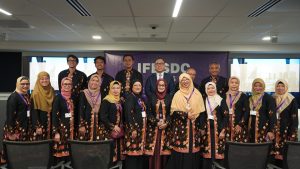
The first day concluded with a welcoming dinner hosted by Ambassador Indroyono Soesilo at the Indonesian Ambassador’s Residence, providing a platform for participants to strengthen networks and continue informal exchanges. Day One of IFESDC 2026 underscored the growing momentum behind digital Islamic finance and reaffirmed the commitment of global stakeholders to building inclusive and ethical financial systems. The conference will continue tomorrow with academic dialogues and research paper presentations.
Media Contact:
IFESDC 2026 Organizing Committee
Washington, D.C.