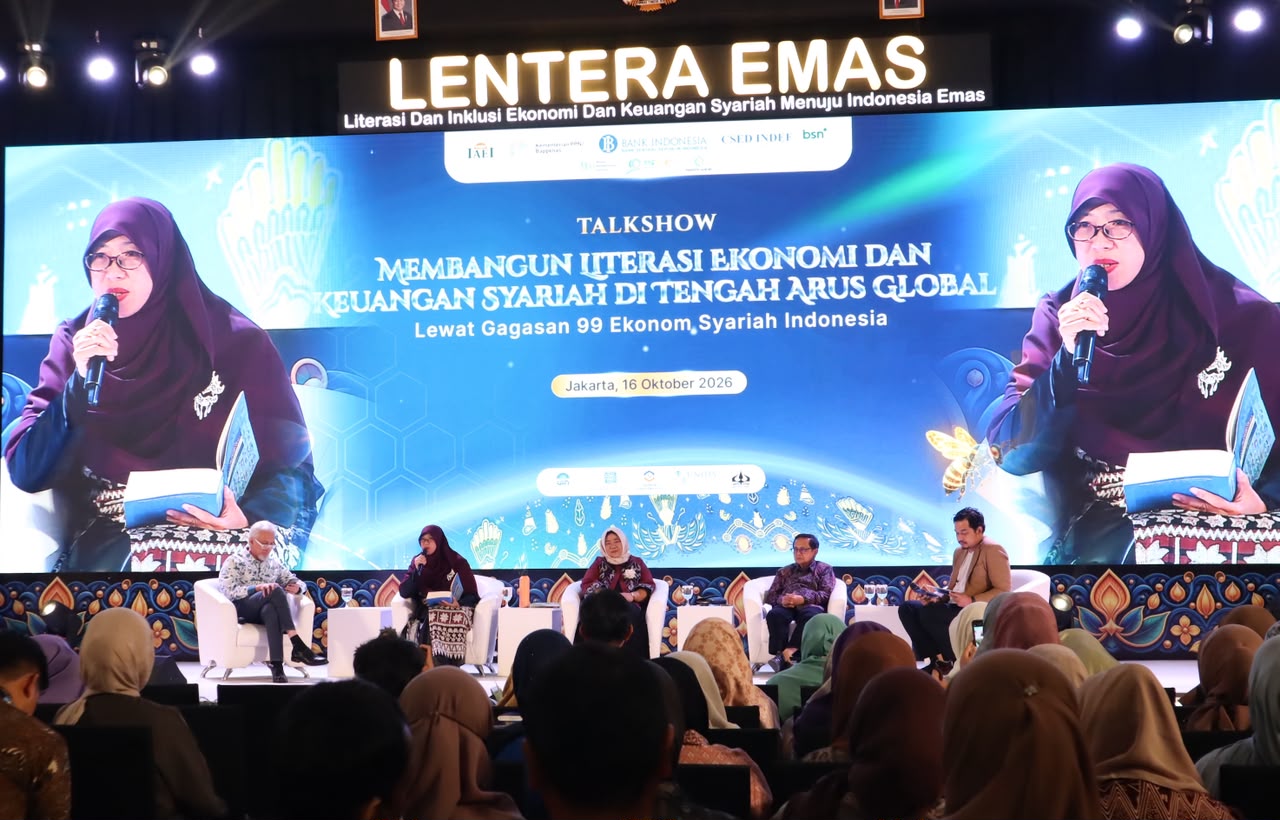


Washington, DC — Showcasing Indonesia’s Islamic social finance model on the global stage, Ahmad Juwaini, Chairman of Dompet Dhuafa Republika Foundation, presented “Social Finance Practices to Achieve Social Welfare” at the 2026 International Conference on Islamic Economics and Finance for Sustainable Development (IFESDC), held at the World Bank Headquarters in Washington, DC.
Marking its 33rd anniversary, Dompet Dhuafa continues to demonstrate how integrated Islamic philanthropy serves as a powerful catalyst for long-term poverty alleviation and inclusive economic development. Marking 33 years of dedicated service in Islamic social finance practices, Dompet Dhuafa Republika Foundation continues to demonstrate how integrated Islamic philanthropy acts as a powerful catalyst for long-term poverty alleviation and economic inclusion.
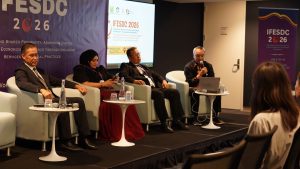
By combining traditional donation instruments like Zakat, Infaq, Shodaqoh, and Waqf with productive microfinance schemes, the foundation successfully bridges the gap between social financial resources and real-market economic development. According to framework guidelines from the Islamic Development Bank’s Islamic Research and Training Institute, this systematic approach redistributes wealth effectively while fostering economic self-reliance across vulnerable communities.
Dompet Dhuafa’s 2025 financial exposure highlights extraordinary institutional performance, having collected 26.15 million USD (over 426 billion IDR) and distributed 26.13 million USD directly into high-impact social programs. These funds reached over 2.82 million beneficiaries nationwide across critical sectors including education, healthcare, and economic empowerment.
“The synergy of zakat, waqf, and economics creates self-reliant people,” Ahmad Juwaini emphasized, underlining Dompet Dhuafa’s vision that Islamic social finance should empower beneficiaries to become economically independent rather than permanently dependent on aid.
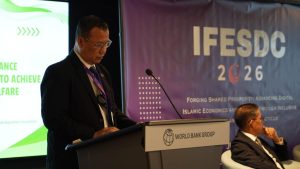
The foundation’s strategic focus relies heavily on human capital investment and sustainable livelihoods rather than short-term emergency handouts. In the education sector, flagship initiatives such as the Etos, Bakti Nusa, and Smart Ekselensia scholarships supported over 96,000 beneficiaries in 2025 alone, with long-term tracking showing that over 90 percent of scholarship graduates successfully rise and remain above the national poverty line. Simultaneously, economic empowerment initiatives like DD Farm, Desa Tani, Vaname Shrimp Aquaculture, and community processing industries supported 11,653 micro-enterprises. Remarkably, 70 percent of participating small business owners have been elevated beyond poverty thresholds through these productive capital interventions.
To further strengthen grassroots economic resilience, Dompet Dhuafa integrates Islamic microfinance institutions that utilize interest-free Qardhul Hasan schemes. This mechanism cuts the cycle of high-interest predatory lending that often traps unbanked vendors, offering them fair capital access to grow micro-businesses. On a macro scale, this multi-stage transition model, guiding individuals from welfare recipients to active zakat donors, directly aligns with the Indonesian government’s National Medium-Term Development Plan for 2025–2029. As Dompet Dhuafa enters its next chapter under the theme of Green Philanthropy Transformation, the institution reaffirms its commitment to blending environmental sustainability with social finance to build a resilient, dignified, and prosperous society.
Source: Sakinah Finance Public Relations