Oman, 2–4 February 2026 — Sakinah Finance reaffirmed its role in advancing inclusive and impact-oriented Islamic finance during the Islamic Financial Services Board (IFSB) Global Forum, held in Muscat, Oman. The forum brought together regulators, financial institutions, fintech innovators, and civil society leaders to discuss the future direction of Islamic finance in a rapidly evolving global landscape. Discussions highlighted the importance of resilience, sustainability, and purpose-driven growth in shaping the next phase of Islamic finance.
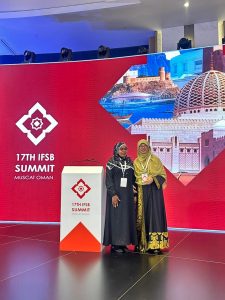

Sakinah Finance was represented by Murniati Mukhlisin, Founder and Chief Executive Officer, who participated as a panelist in the session Grassroots to Global Impact – Islamic Finance and the Role of NGOs in Driving Social and Economic Change. The discussion explored how Islamic social finance instruments such as zakat, waqf,and Islamic microfinance can be translated into scalable and sustainable solutions for vulnerable communities.
The panel featured Mohammed Kroessin from Islamic Relief Worldwide as keynote speaker, alongside Ridzwan bin Bakar from Yayasan Waqaf Malaysia, Mehdi Zidani from UNHCR, and Mohammed Al Busaidi from Bausher Endowment Foundation. Speakers emphasized the importance of strengthening collaboration between NGOs, regulators, and Islamic financial institutions to address persistent social and economic inclusion gaps.


During the session, Sakinah Finance also shared its family-oriented Islamic financial advisory and education model, which integrates faith-based values with practical financial tools to promote household resilience and holistic well-being. Founded by Luqyan Tamanni and Murniati Mukhlisin, Sakinah Finance draws on more than 40 years of combined experience in Islamic finance research and consultancy, while consistently reinvesting part of its commercial revenue into long-term social empowerment initiatives.
Currently, Sakinah Finance implements three core empowerment programs: a flagship initiative for persons with disabilities, reaching nearly 10,000 beneficiaries across 14 provinces in Indonesia; a reintegration program for inmates and former inmates in partnership with UPZ Sobat Syariah; and women’s economic empowerment programs for subsistence communities implemented with Tazkia, benefiting close to 10,000 women.
While these programs have demonstrated tangible social impact, Sakinah Finance recognizes that the inclusion of persons with disabilities within Islamic financial institutions continues to face structural and regulatory challenges. Beyond programmatic support, there remains a need for broader alignment in legal frameworks, institutional awareness, and inclusive product design to ensure long-term financial security and dignity. In response, Sakinah Finance continues to initiate advocacy efforts, policy dialogues, and capacity-building activities to support the development of a more inclusive Islamic finance ecosystem that safeguards the rights, future needs, and overall well-being of persons with disabilities.
“One of the challenges we face is the limited awareness that the needs of persons with disabilities in Islamic financial institutions extend beyond physical facilities such as ATMs and signature accessibility; they also require Islamic financial products and services that are tailored to their future life needs,” said Murniati.
Beyond the NGO-focused session, the forum also featured high-level discussions, including the CEO’s Forum on the Profit–Purpose Paradigm and the Fintech Forum on Digital Transformation in Islamic Finance, with participation from leading Islamic banks, regulators, and fintech leaders.

Overall, the IFSB Global Forum reinforced the growing consensus that Islamic finance must move beyond regulatory compliance and profitability toward delivering measurable social impact. Sakinah Finance’s participation demonstrated how NGO-led, faith-based, and family-centered approaches can complement regulatory and industry efforts in positioning Islamic finance as a genuine force for good.
